Montana ’s Natural Streambed and Land Preservation Act, also known as the 310 Law, is a state law which requires that any person planning to work in or near a perennial stream or river on private land must first obtain a 310 Permit from the local conservation district. The purpose of the 310 Law is to insure that projects on perennial streams will be carried out in ways that are not damaging to the stream, its banks or to adjoining landowners.
The Flathead Conservation District (FCD) administers the 310 law in Flathead County. FCD retains jurisdiction over approximately 600 streams including all perennial streams plus a few sensitive non-perennial streams as well. If in doubt about whether your stream is affected, check with us. There is no fee for the 310 permit. It is possible that other permits are required by other agencies.
What kinds of activities require a permit?
- Stream crossings (culverts, bridges, fords)
- Streambank protection projects (stabilization, “seawall”)
- Docks, boat houses
- Diversions
- Channel changes, dredging
- Trenching in utlity lines or pipelines
- New dams, reservoirs, ponds
A permit may also be required if an existing project needs repairs and/or alterations. Rules change through time, so be sure your methods are up to date.
In Case of Emergency
The 310 Law contains a provision to handle actions necessary to safeguard life or property, including growing crops, during emergencies. The emergency form is available on this Web site or from the FCD office. We encourage you to notify us immediatly in an emergency. Our supervisors can help you make the best decisions for you and for our water resources. If you must take emergency action, notify the FCD in writing within 15 days of the action taken explaining what was done and why. The emergency action will be reviewed by the FCD, which will decide whether the action was appropriate, must be modified, or must be removed and/or replaced.
You can download an emergency form from this Web site, or contact the FCD. Streams with Bull Trout require a consultation with the Army Corps of Engineers prior to activity. Go to the Bull Trout Information Page.
Activities Without a Permit
It is a misdemeanor to initiate a project without a permit; to conduct activities outside the scope of the permit, to violate emergency procedures, or to use prohibited materials in a project. Upon conviction of a misdemeanor, a person may be punished by a fine up to $500 or by a civil penalty not to exceed $500 per day for each day the person continues to alter the stream. In addition, at the discretion of the court, the person may be required to restore the damaged stream as recommended by the FCD to as near its prior condition as possible.
If you would like to report an activity that may be a violation of the 310 law, please fill out the complaint/violation form and mail it to the FCD. You can download a complaint/violation form from this Web site, or contact the FCD.
Permit Process
Learn about 310 applications and the permit process. The FCD Board holds their 310 meeting on the second Monday of the month. All decisions on 310 permits are made at these meetings, which are open to the public.
Considerations
In making a decision regarding 310 stream permits, the district considers these factors.
Permit Chart
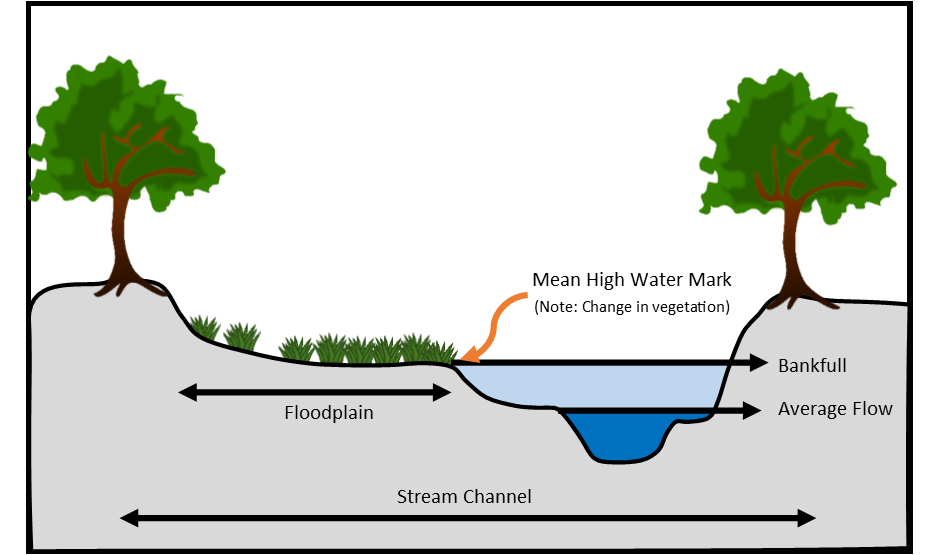
View a diagram and determine where your project will take place: streambed, streambanks, wetlands, or floodplain and what permits may apply to your project.
Forms & Applications
Downloadable forms and applications including Permit Application, Emergency Form, 310 Adopted Rules and Complaint Violation Form. For emergencies we recommend a site visit by a board member prior to activity. Please call to set up an appointment.
Rules of Arbitration
The Natural Streambed and Land Preservation Act arbitration process is governed by the Uniform Arbitration Act, MCA 27-5-111 through 27-5-324, except as expressly provided in these rules.